

Five strands to build a cure
The Cure Programme:
- Electroceutical Therapies
- Pharmaceutical Therapies
- Ultrasound Therapies
- Cell-based Therapies
- Translational Neurobiology
If you have had a child or have been to a physio, you are likely to have come across ultrasound. Maybe you had a scan during pregnancy? Or perhaps your physio used it to treat a sprain or strain?
But ultrasound can do far more! And research into its applications is one of the five key strands of Catwalk’s Cure Programme.
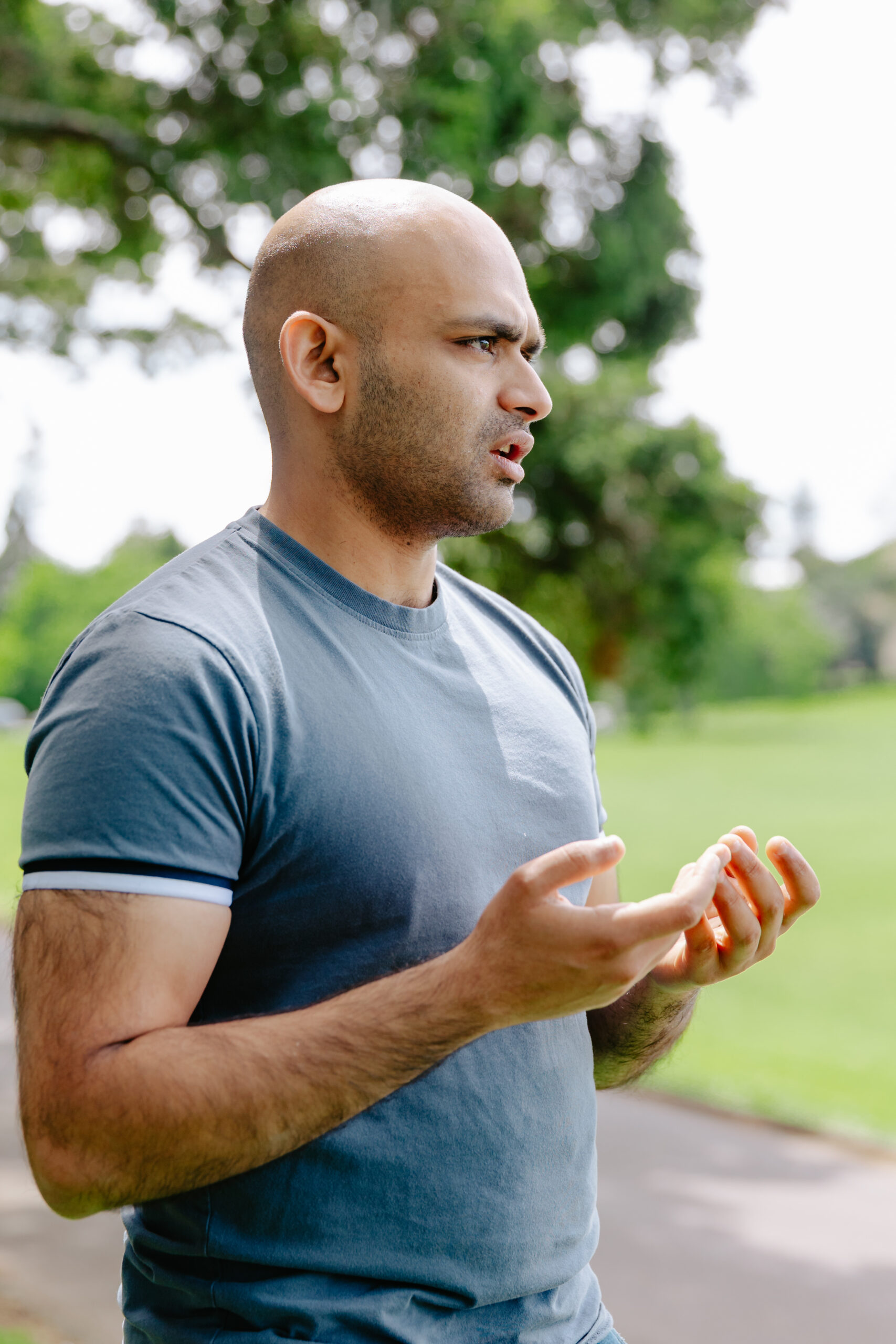
Dr Sachin Thakur is the Cure Programme lead on Ultrasound Therapies.
He’s a Senior Lecturer at Auckland University and the Associate Head (Academic) of the School of Pharmacy.
“Some people think it sounds like science fiction,” says Sachin, “but ultrasound is being used to heal fractured bones. You can speed up the inflammatory process. When you apply ultrasound to parts of the body, you effectively tell the brain, ‘This area needs more help than you are giving it.’
“Ultrasound is also being tried to heal sciatic nerves, and I wondered, ‘What about the central nervous system?’ ‘What about spinal cord injury?’ ‘Would It help?’ So, we’re building a model to find out.
I’m exploring ultrasound in combination with medicines and ultrasound as a standalone
treatment.
As a pharmacist, I’m interested in ultrasound’s use to enhance medical treatments. The way it interacts with different medicines to help repair the spinal cord. This feeds into the work of my teammates. They’re exploring drug-containing implants that could be made to respond to ultrasound waves.
I’m looking at ultrasound to encourage nerve regrowth and regeneration. That weaves into the cell-based therapies others in the team are working on.
And we know ultrasound also helps with functional recovery. So, I’m looking at it as a treatment for spinal cord injury in its own right. It may even help with spasticity and pain – but we need to know more.
We’re building models to confirm what ultrasound can do and weaving that into the research of others in the team. – to find a way to repair and heal the spinal cord.”
“There are a lot of things we can prove work really well in the lab,” says Sachin “but when you try and move them to a complex model, they stop working. We have carefully and deliberately built a lab model that can closely predict how this technology will work inside our body. It’s early days, but we are seeing that ultrasound can meaningfully support nerve growth.
Research can be long, and progress is not linear. Some stuff you can turn around pretty quickly, but not this stuff. You have to be pretty strong and resilient. You deal with a lot of failures, and things take longer than you expect. The key is knowing how to react when you hit a wall – finding other avenues, possibilities.
Once the foundations are right and working consistently, the science will leapfrog.”
Sachin is one of a team of 27 researchers who make up the Catwalk Cure Programme. Working as a team, they’re dedicated to curing spinal cord injury; to return sensation, movement and function.
Based here and in Sweden, and collaborating with researchers around the globe, this is a multi-disciplinary team. They’re weaving together the strongest research strands to find a cure faster.
The combined approach of the Cure Programme is showing real promise. Your donation ensures their continued focus and supports their continued progress. Together, we will cure spinal cord injury.

Dr Sachin Thakur with fellow Cure Programme researchers.
Make a difference, today.
Thank you.